Storm season first: be the contractor they can reach
After a hailstorm, searches like “roofer near me” and “roof leak repair” spike. The person typing is usually standing in a hallway with a phone in one hand and a wet ceiling above them. They want two answers within seconds: do you work in my area, and can I reach you right now?
Put this where nobody has to scroll or open a menu:
- Your phone number as a tap-to-call link
- The areas you serve, in one sentence
- A clear statement of how fast people can expect to hear back, exactly as fast as you really respond
Be careful with emergency promises. If your site says “24/7 emergency service”, somebody has to pick up at 2 a.m. If you cannot offer that, say what you can offer, for example a callback during business hours, and only if it is true.
Looking reachable means: the number is visible before anyone has to search for it.
Insurance claims and financing: explain the process, not the fine print
A storm-damaged roof often comes with two worries at once: how does the claim work, and how do I pay for what insurance does not cover? Many roofing sites say nothing about either, which leaves the homeowner guessing.
You do not have to explain insurance law. What helps is a short, honest page that walks through your own steps: inspection, photos and documentation, estimate, scheduling. If you help homeowners with the paperwork, say what you actually do. If you offer financing, say so and link to the details, without quoting rates on the page.
- Describe what you do and what the homeowner does, step by step
- Only mention insurance or financing help if you truly offer it
- Keep it general: rules and policies differ, so avoid promises about what insurance will cover
Services and service areas: separate pages, honest maps
A single “Services” page that lists repair, replacement, metal roofing, flat roofs and gutters answers none of those questions well. A homeowner searching for “flat roof leak repair” is best served by a page that deals with exactly that: what usually causes it, how you work, how long it takes, how to reach you.
The same goes for where you work. Listing your service area clearly on one page helps everyone. A separate page for every town you could theoretically reach does not: those pages tend to say the same thing with the place name swapped, and visitors notice. Create a dedicated area page only where you have real projects and something real to say.
- One page per service you actively sell, with real examples
- One clear service-area section instead of dozens of near-identical town pages
- On every page, an obvious next step: call or request an estimate
Curious where your current website stands? In a free intro call you get an honest assessment.
Request a Free CallShow the work instead of describing it
Roofing is visual. A before-and-after pair of a worn roof and a new one says more than a paragraph about quality. The hard part is keeping the gallery alive. A gallery that is filled once and never touched is an archive within two years.
Make adding a project a two-minute job:
- One phone photo and three lines: area (not the street address), type of work, material
- Filterable by service, so a flat-roof visitor sees flat roofs
- Images resized for the web before they go online, because a raw phone photo can weigh several megabytes
Before you publish pictures of customers’ homes or people, check that you are allowed to. This is not legal advice, but it is worth settling once.
Trust signals: license, insurance, warranty
A roof is an expensive job that most homeowners cannot judge themselves, so they look for signs they can trust you. License, insurance and warranty information are the classics, and they only work if they are real and easy to verify.
Show only what a customer can check for themselves.
- Your license and insurance details as they apply to your business, with a link where it makes sense
- Warranty terms exactly as they appear in your contracts
- The people behind the company: names and faces, so customers know who shows up
- Years in business, if that is a strength
Requirements differ by state and trade, so check what applies to you. What does not belong on the page: invented reviews, badges you have not earned, and stock photos of crews in someone else’s uniforms.
Hiring: a careers page instead of a job ad
Good crew members are hard to find, and most of them look at your website before they ever apply. A PDF job ad tells them nothing about what working for you is like.
- What a normal day looks like, in plain words
- Real photos of your crew, not stock images
- What you expect and what you offer, stated openly
- An application that is as simple as possible: a call or a short form
Candidates choose companies that explain themselves. A careers page that does this work for you pays off even when you are not hiring right now.
From our work
How we solved it for Stein Bedachungen
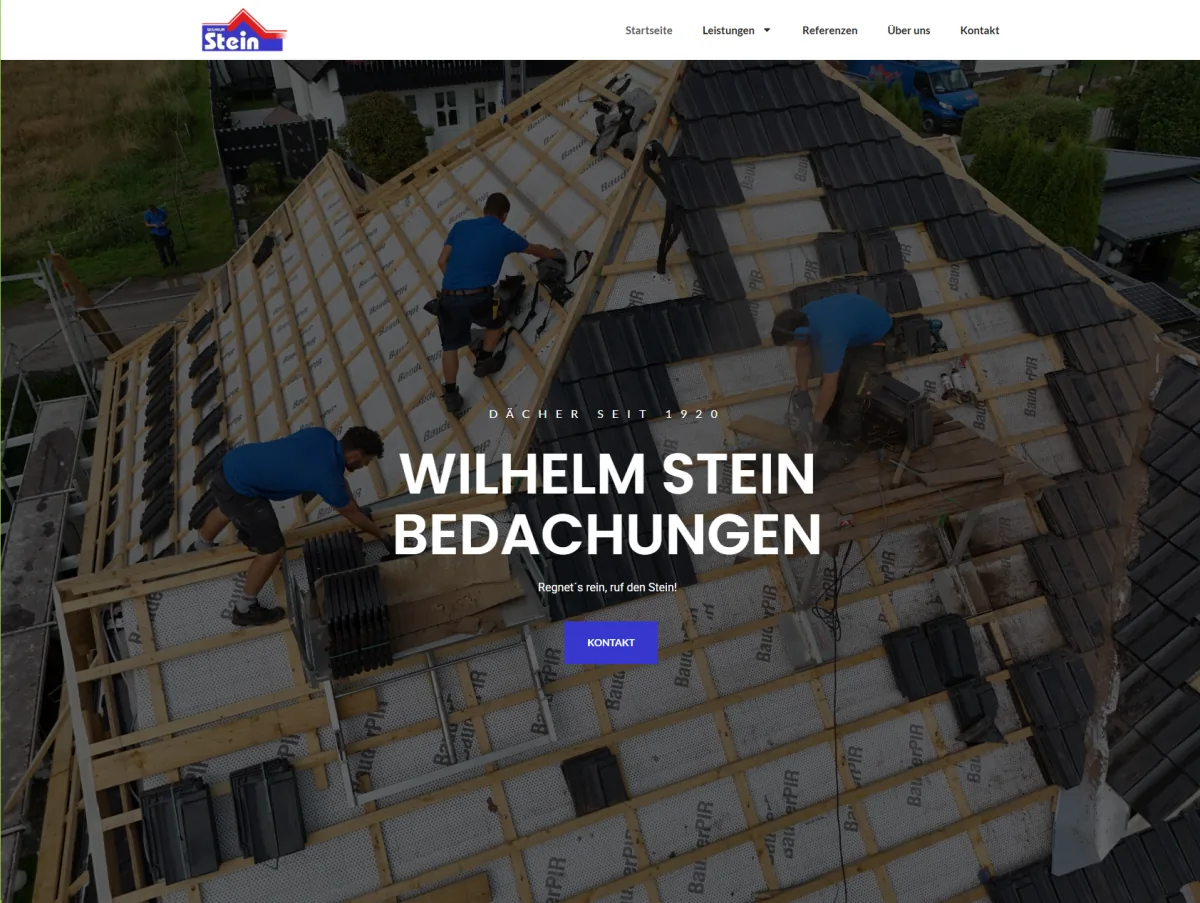
Wilhelm Stein Bedachungen is a roofing company in Germany whose homepage presents it as a master roofer business “since 1920”. We built the website for this company. Note that it is a German project, so local trade terms and requirements differ from the US. These things are visible on the live site today:
- Services are split into six areas, from residential roofs to industrial roofs, heritage restoration and lightning protection, plus repair
- A reference gallery shows more than twenty projects, from private homes to commercial buildings
- Apprenticeships are described with duration, start date and requirements
- The phone number and a contact form are easy to reach